

Your Business Is Evolving, Is Your Tax Plan?
This article is based on insights and intellectual property from Regan Van Rooy.
For the full original article, visit: Regan Van Rooy
How Your Tax Needs Change as Your Business Grows
Every business starts somewhere small. It could be a garage, a kitchen table, or a modest office. As your business grows, one thing becomes certain. Your tax responsibilities grow with it.
What starts as a simple annual filing can quickly become more complex, involving multiple regulations, cross-border considerations, and important financial decisions. Understanding how your tax needs change is key to staying compliant and avoiding unnecessary risk.
Tax Compliance VS Tax Consulting
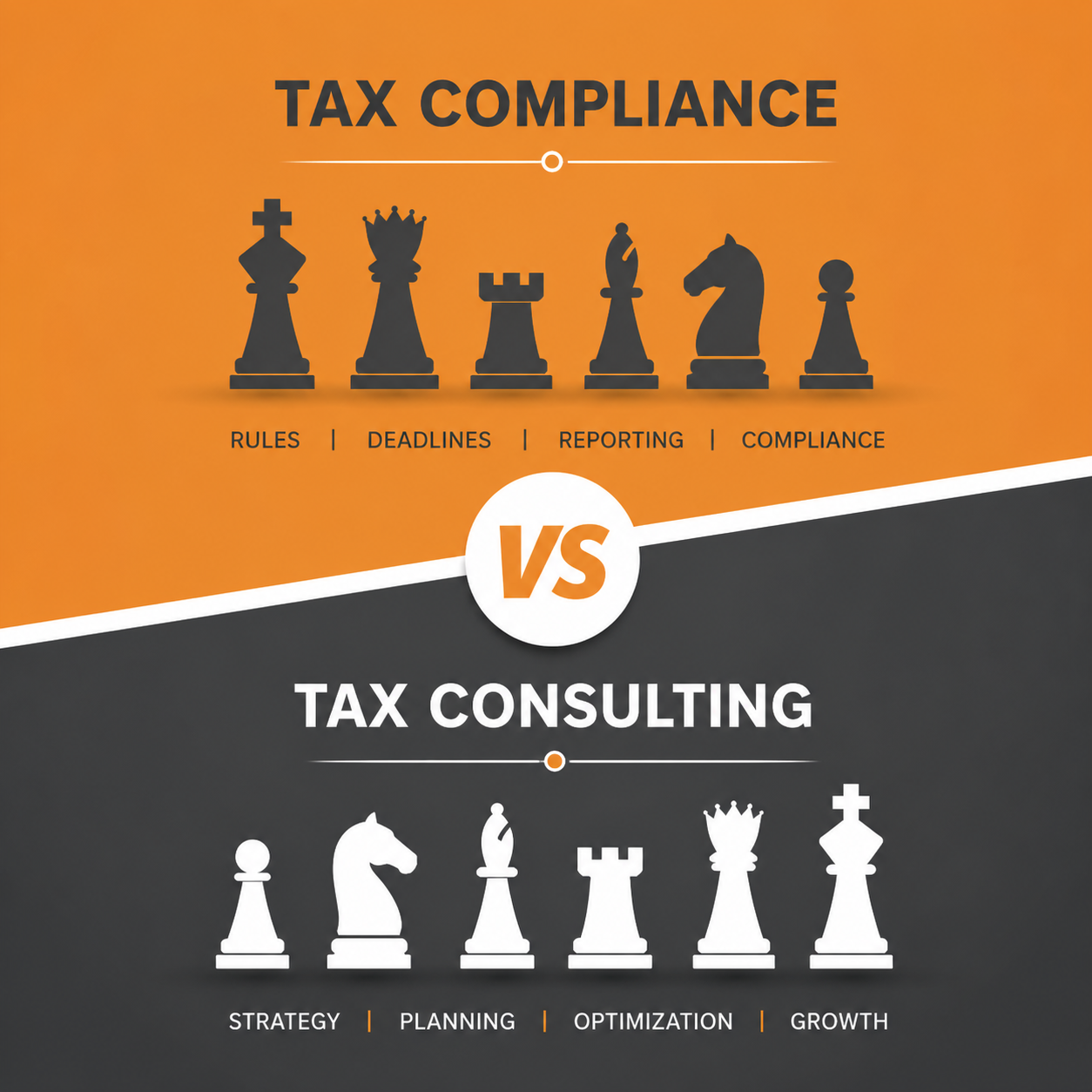
Before looking at the different growth stages, it helps to understand the two main areas of tax.
Tax Compliance
This is the essential work required by law
Submitting company tax returns
Managing VAT submissions
Handling PAYE and payroll taxes
Meeting deadlines and regulatory requirements
Most smaller businesses outsource this function, and that usually works well in the early stages.
Tax Consulting
This focuses on strategy and planning. It includes;
Structuring your business in a tax-efficient way
Expanding into new markets
Managing cross-border operations
Understanding tax risks and obligations
As your business grows, this becomes more important.
The Stages of Tax Growth
-
![]()
1. Startup Stage
At this point, your business operates locally, and your tax needs are simple. Basic compliance is enough, and outsourcing is usually the best option.
-
![]()
2. Scaling Locally
As the business grows, things become more complex. You may deal with funding changes, employee incentives, and more detailed queries from SARS. Occasional tax advice can be useful.
-
![]()
3. Expanding Internationally
Operating across borders brings new challenges:
- Tax obligations in other countries
- Payroll implications for remote employees
- VAT registrations in different regions
Professional tax guidance becomes essential at this stage.
-
![]()
4. Setting Up International Entities
Opening operations in other countries requires careful planning:
- Choosing between a branch or subsidiary
- Deciding on funding structures
- Understanding how profits will be taxed
Strategic tax input is important here.
-
![]()
5. Operating as a Multinational
With a presence in multiple countries, tax becomes more complex:
- Transfer pricing requirements
- Withholding taxes
- Ongoing international compliance
Many businesses begin building internal tax capacity at this stage.
-
![]()
6. Fully Developed Tax Function
Tax becomes a core part of the business. Dedicated teams manage compliance, planning, and risk while supporting overall growth.

Why This Matters
Your tax approach needs to grow with your business. What works at the startup level will not be effective for a company operating across multiple countries.
Knowing when to move from basic compliance to strategic planning helps you stay compliant, reduce risk, and operate more efficiently.

Caoilfhionn Van Der Walt
This article draws on insights from Caoilfhionn, a chartered accountant based in Mauritius. She previously led the international tax function at Sasol for nine years and is now part of Regan Van Rooy, as a director.
Read more on the article here: Structuring a Tax Team Through the Business Growth Journey